
The Bauhaus Movement: A Revolution Unifying German Tradition and Innovation
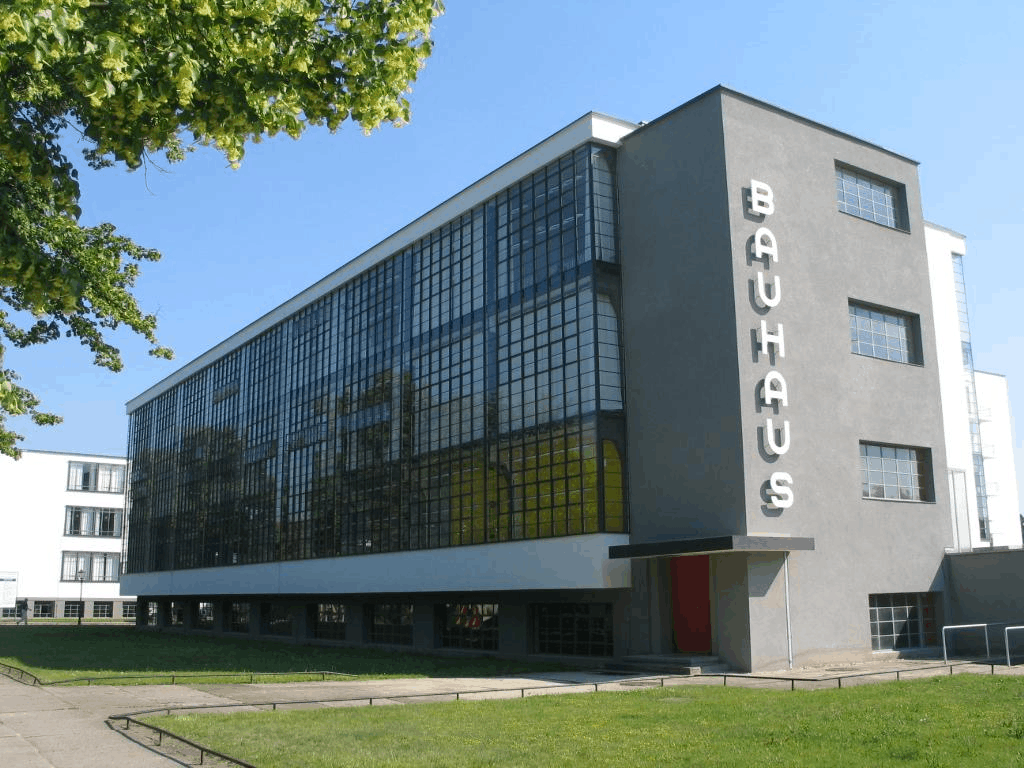
Following Germany's defeat in World War I, the nation faced massive reparations and economic collapse. The traditional aristocracy and royal aesthetics crumbled entirely. Old courtly opulence in decoration and architecture lost its social foundation, sparking a nationwide demand for new cultural and design aesthetics accessible to all people.1919 In the year 1918, with the establishment of the Weimar Republic, an open cultural policy embraced avant-garde art and reformist thought. Around the same time, the Deutscher Werkbund was the first to propose “Unity of Art and Industry”the philosophy of advocating standardized, functional industrial design, which laid the core ideology for the development of Bauhaus.1919In [Year], the Bauhaus Manifesto was published and the Staatliches Bauhaus school was established, marking the official birth of the Bauhaus movement.1923Annual Weimar Exhibition, officially establishing “Unity of Art and Industry”As the core guideline.1925Moved to Dessau in the same year, followed by the completion of the iconic Bauhaus building. Under several successive directors, functionalism was fully deepened.1933In 1933, the Nazis shut down the school, ending the Bauhaus movement in Germany. Faculty members went into exile abroad, launching the global expansion of the Bauhaus system.
Although the Bauhaus movement existed for a short time in Germany, its impact has been profound. It neither severed ties with tradition nor clung to outdated forms; instead, through sublation, reconstruction, and integration, it achieved a dialectical unity of tradition and innovation, realizing “Tradition lays the foundation for innovation; innovation breathes new life into tradition.”。
The two most critical principles of Bauhaus are: first, reject superficial retro forms: refuse 19 The ornate carvings of the neo-Gothic and Rococo styles, once rampant symbols of aristocratic opulence, were rejected by Bauhaus. It argued that intricate handcrafted decoration was incompatible with machine mass production; such decorative forms were obsolete and required radical reform. Second, it sought to inherit Germany's deep spiritual core: synthesizing the "medieval guild craftsmanship spirit" and the "Prussian tradition of practical rationality"—two foundational cultural pillars—into a basis for modern innovation. This approach organically integrated "the unity of artisan and artist, characterized by precision and restraint" with "function-first principles, rigorous order, standardization, and service to the public," while rejecting lavish aristocratic aesthetics. Together, these elements formed a dialectical relationship: discarding corrupt external forms while preserving the inner national spirit, using industrial means to reshape traditional values.
The Bauhaus era produced numerous iconic works, most notably the Wassily Steel Tube Chair and the Bauhaus Building. The Wassily Chair inherited the minimalist structure and strict adherence to human proportions of traditional German wooden chairs while innovating in materials. Leveraging steel tubes from WWI military production, it abandoned the heavy form of solid wood for a modular, lightweight design, upholding the principles of German “Effective and restrained” A legacy of furniture tradition reborn through a new industrial form. The Bauhaus building preserves the exposed structure of Gothic architecture, the functional logic of Prussian public buildings, and the vernacular approach of using local materials, while innovatively incorporating steel-and-glass curtain walls, open floor plans, unadorned facades, and zoned modern functional layouts. It upholds the German tradition of structural rationalism while achieving modern innovation through industrial construction techniques.
Bauhaus discarded the outdated forms of luxury and handcraft monopoly, distilling the spirit of rationality, precision, and serving the public. Using industrial technology and modern art as new carriers, it reconstructed a design culture suited for modern society.
It achieves a mutual enhancement of tradition and innovation, forming an organic unity characteristic of modern German design. This distinctive feature sets Bauhaus apart from both pure revivalism and radical avant-garde movements, offering “Modernizing Local Culture” Classic paradigm.