A Look at the Differences in Innovation Logic Between China and Germany Through the History of German Automakers in China
Over the past four decades, German automakers' logic for establishing manufacturing plants in China has undergone a dramatic shift.
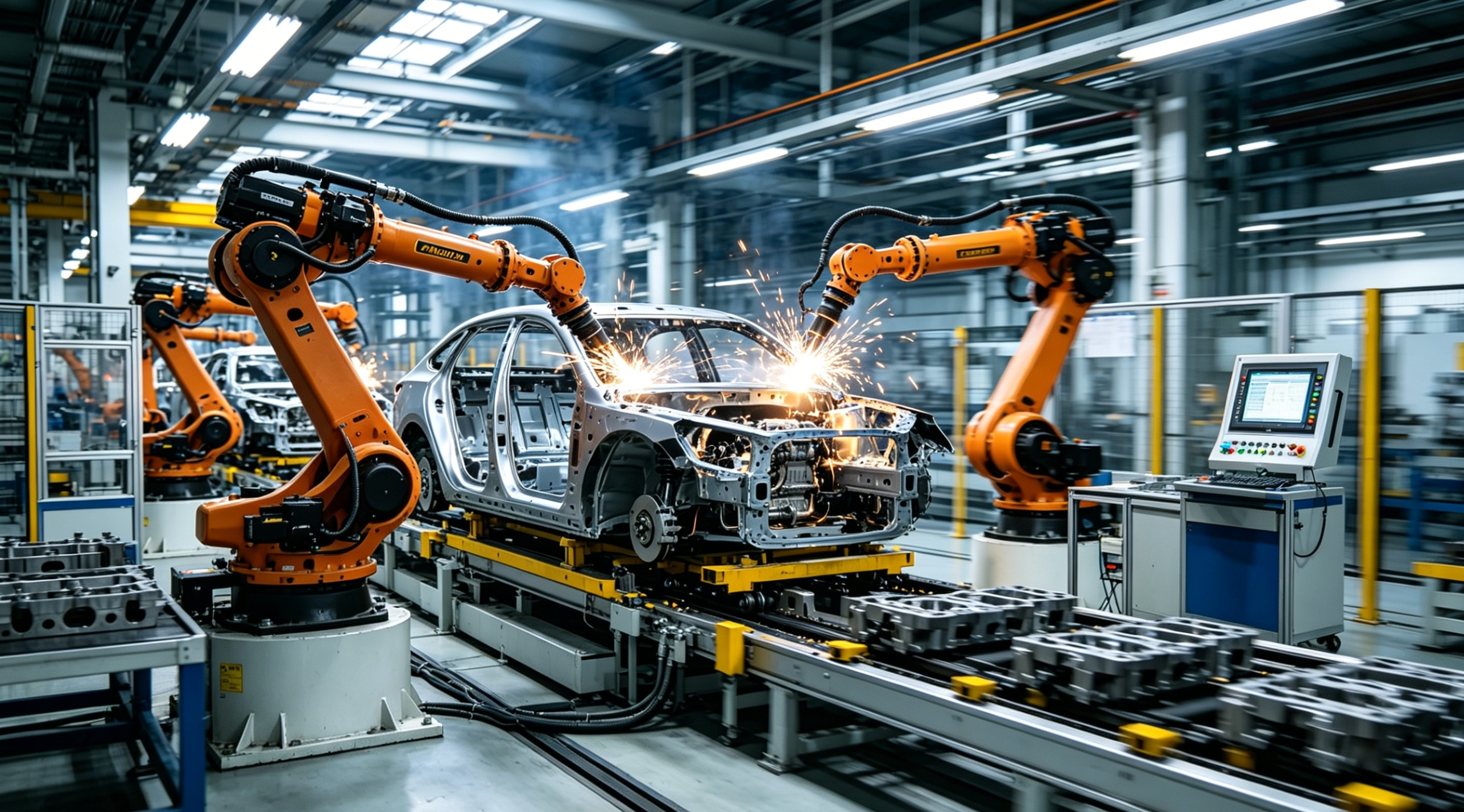
1984-2014German automakers entered China to capture market share and leverage cost arbitrage.1984In 1984, Volkswagen was established in China. At the time, Germany's logic was straightforward: China offered a vast potential consumer market, low labor costs, and increasingly open policies. Over the past three decades, VW's factories in China have essentially served as..."Assembly Workshop"Core components are imported from Germany, while labor-intensive final assembly takes place in China. This model preserves reliance on Germany's domestic supply chain while meeting Chinese consumers' demand for German-made brands. As the first multinational automakers to respond to China's call for foreign investment, German carmakers earned goodwill in China and established the dominant position of German vehicles in the market.
However, as time has passed and the world has changed dramatically, the situation has been completely transformed.2024In the year, Volkswagen officially announced an investment25Euro billion expansion of Hefei production and innovation center; Mercedes-Benz investment in Beijing10BMW to invest billions of euros in building an autonomous driving research institute; BMW willMINIThe electric vehicle production line has moved from Oxford, UK, to Zhangjiagang, China. A deeper shift is occurring in the supply chain: Volkswagen sources 90% of its parts locally in China; BMW's Shenyang plant has achieved a localization rate of100%. The core reason for this reversal is that China has evolved from a consumer market into a technology ecosystem. German automakers are building factories in China not to sell cars to Chinese consumers, but to tap into the world's most complete new energy vehicle supply chain—batteries, motors, power electronics, smart cockpits, and autonomous driving algorithms. German domestic plants"Not ready for electric vehicles"China's EV ecosystem has become the only viable soil for Germany's electrification transition.
How did a long-established automotive powerhouse gradually lose ground and step down from its throne in the new energy race? Germany's lag in new energy stems from three structural weaknesses.
1. Policy shifts at the national level
The decline of Germany's automotive industry is not solely determined by market competition; political intervention cannot be overlooked. The European Union2035The annual ban on internal combustion engine vehicles has been repeatedly vacillating, starting from"Total sales ban"To"Allow synthetic fuel exemption"forcing German automakers to maintain a dual structure of internal combustion engine and electric vehicles, significantly increasing costs. More critically,2023At year-end, the German government eliminated EV purchase subsidies, causing an immediate drop in new energy vehicle sales and a year-over-year decline in EU EV sales. Germany's political interference in the automotive sector is characterized by the phase-out of nuclear power leading to high energy costs, insufficient support for manufacturing, and bureaucratic resistance to industrial policy. Germany remains cautious about planned regulation or state guidance.
2. Technological Path Dependence and Talent Gaps
Germany benefited from the Industrial Revolution in the traditional internal combustion engine vehicle sector, with its craftsmanship renowned. However, this legacy has also fostered inertia in investing in new technologies and transitioning to autonomous driving. The core of EV technology lies in electronic control, electrical architecture, and software—areas where Germany is weakest. Compounding this challenge is a critical talent gap: Germany's most experienced engineers are now in their 40s, 50s, or even 60s, while90Back00Young people today are largely unwilling to study engineering, opting instead for business administration or economics. Germany lacks a sufficient reserve of electrical and software engineers.AI、ITInnovation in the new energy sector is nearly impossible to breakthrough.
3. Corporate Governance and Union Obstacles
German unions grant workers excessive rights, with half the seats on supervisory boards held by employees. This has led to joint opposition from unions and state governments against key decisions by companies like Volkswagen—such as closing domestic plants, cutting jobs to boost efficiency, and relocating electric vehicle R&D to China.
This round of competition in the new energy vehicle (NEV) sector reflects a clash between China's state-strategy-driven "overtaking on a bend" approach and Germany's enterprise-led incremental improvement model, highlighting the efficiency differences between two innovation paradigms. China's NEV rollout is led by government bodies, relevant agencies, and social organizations, with implementation intensity far exceeding that of Germany and more concentrated industrial investment. Key Chinese policies include tax exemptions for new energy vehicles, trade-in subsidies, local industry funds, and comprehensive charging infrastructure development."top-down"Strongly promoted, this has enabled China to build the world's largest new energy vehicle (NEV) supply chain. In Germany, NEV promotion relies more on joint industry associations, with the government favoring self-regulated standards by enterprises. While this approach worked well in the traditional internal combustion engine era—where enterprise-led standards were easily adopted—it falls short in the NEV sector, which demands cross-industry collaboration, infrastructure development, and early-stage market cultivation. The German government is constrained by..."Fair Competition Principle"political correctness prevents large-scale funding of domestic enterprises for cutting-edge R&D, unlike in the U.S. and China.
Beyond differing policy orientations, the two countries also exhibit differences in entrepreneurial culture. German entrepreneurial culture is rooted in"Craftsmanship", which pursues perfection, values incremental improvement, and fears failure. This culture was an asset in the era of mechanical manufacturing but has become a major obstacle in the software-defined vehicle era. German automakers face lengthy decision-making chains, with boards of directors, labor unions, and state governments engaging in complex negotiations, resulting in slow strategic transformation. In contrast, Chinese new energy vehicle entrepreneurs demonstrate a completely different mindset—they dare to"All in"Electrification, tolerance for rapid iteration, and adept use of capital leverage and government resources. From BYD's Wang Chuanfu to NIO's Li Bin, Chinese automotive leaders are more willing to break industry boundaries and bring internet-style iteration into manufacturing. This cultural difference gives China a clear lead over Germany in areas requiring fast iteration—such as smart cockpits and autonomous driving algorithms.
German automakers must accept reality, shed their arrogance as technology exporters, and treat China as a true innovation hub—not just a sales market—by deeply embedding themselves in the Chinese ecosystem. When formulating corporate strategy, they should avoid head-on competition with Chinese brands in the mass-market EV segment and instead focus on high-end niche segments, leveraging their unique differentiators. Only then can they secure a place for themselves in the future.